
Smarter Chicken Road Play
Chicken Road has a 98% long-run RTP, but no strategy can guarantee a win in a single round or session.

The practical way to approach Chicken Road is to control your stake, limits, and exit point rather than predict what happens next. A 98% RTP describes the theoretical average over many rounds; your own session can finish very differently. This guide covers fixed Cash Out plans, risk choices, bankroll limits, round history, and the signs that it is time to stop. You can also return to Home for the wider game overview.
📑 Table of contents
Chicken Road mathematics beats prediction
A 98% RTP is a long-term theoretical return, not a promise attached to one bet or a short session. Treat it as a property of the game model, not as a tool for calculating the next result. Each round is an independent event, so a table of previous multipliers cannot reliably reveal what comes next.
Chicken Road uses Provably Fair technology, which lets you check individual bets in the betting history. That supports transparency, but it does not create a predictable pattern. If you want to learn the controls without risking money, try the demo.
The fixed Cash Out approach
A fixed Cash Out sets your exit point before the round begins. That matters because the decision is easier to change when the chicken is already moving and the result feels close. Choose the threshold in advance, then follow the plan rather than reacting to a lucky moment or a tense one.
Cash Out does not improve the game's mathematical odds. It can, however, help you keep the possible outcome and session length within boundaries you chose while calm.
Choosing a lower target multiplier
A lower target multiplier usually means an earlier exit and a smaller potential return. It may produce more modest results over time, but calling it risk-free would be misleading: the stake remains exposed until the cashout succeeds. This approach suits players who prefer shorter rounds and already accept a limited payout.
Choosing a higher target multiplier
A higher multiplier keeps the stake in play for longer, so the cost of a failed crossing becomes more noticeable. Large multipliers can occur less often, but they are not a dependable way to recover earlier losses. If you choose this route, set a strict attempt limit first and do not raise the stake after a loss.
Bankroll management for a session
| Session budget | Maximum stake share | Stop loss | Stop win | Break time |
|---|---|---|---|---|
| $100 | 5% | $30 | $50 | 10 minutes |
This example sets the boundaries before the first round: the stake stays limited, while the stop loss and stop win define when the session ends. A planned break also interrupts the habit of continuing automatically. Adjust these figures to your own entertainment budget; they are examples, not financial advice.
Set a firm stake and loss limit
Keep the game budget separate from money needed for bills and other essentials. Do not use borrowed funds, and do not deposit more to chase an amount already lost. Once the limit is reached, finish the session. Waiting until another day is safer than increasing the stake on impulse.
Why the Martingale system fails
Martingale asks you to increase the stake after a loss so that a later win can cover the earlier shortfall. The problem is practical as well as mathematical: a losing run quickly demands a much larger bankroll and can hit the game's stake limit. Even if the next round wins, the oversized bet has introduced a fresh risk. Random rounds remain random, and doubling does not create a mathematical edge.
How difficulty changes the risk profile
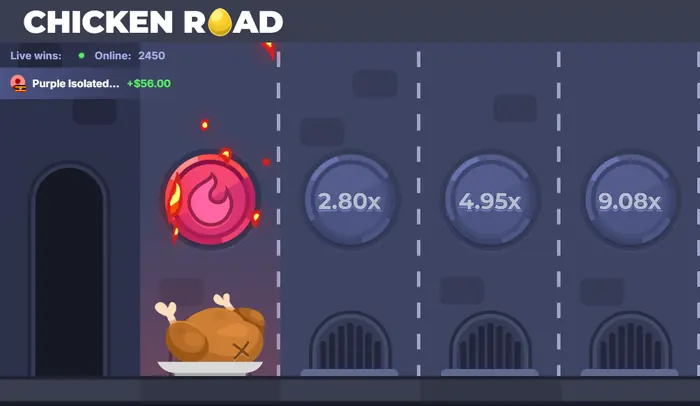
The original Chicken Road version has four selectable levels: Easy with 24 lines, Medium with 22, Hard with 20, and Hardcore with 15. As the difficulty rises, fewer lines remain and the risk of losing before cashing out becomes sharper. The exact settings belong to the particular version you are using, so check the in game rules before you start.
These levels change the shape of the risk, not the long term mathematical expectation represented by the applicable RTP. Choose according to the amount you can afford to lose in one session, not the attraction of a larger possible multiplier. The main site is available from Home.
Round history and thinking traps
Round history is useful for tracking bets, spending, and session length. It is not a source of signals for the next move. After several losses, a player may feel that a win is due; after several wins, the opposite confidence can appear. Neither reaction changes the probability of the next independent event.
Record results if that helps you respect your limits, but do not turn a sequence into a forecast. Notice the moment when you start thinking about winning losses back, because that is a sensible point to pause. History can document what happened; it cannot provide an RNG insight.
Automation without handing over control
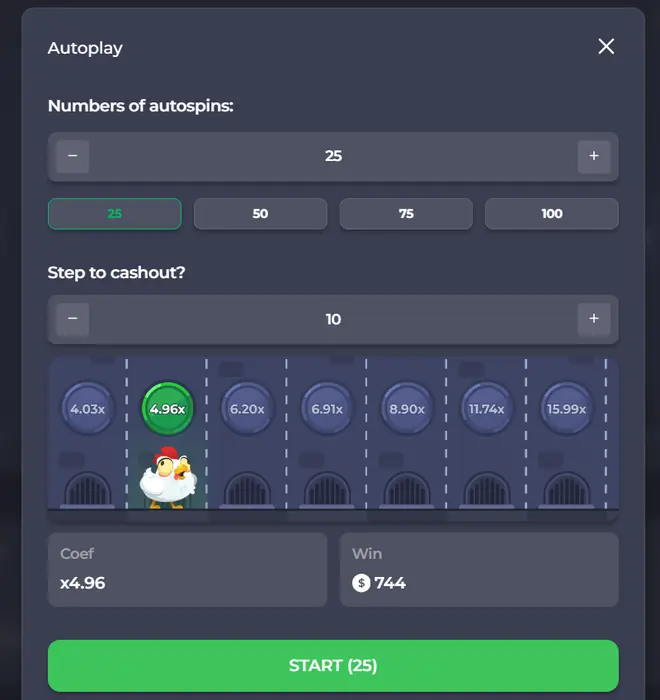
Auto stop and automatic rounds can remove some impulsive button presses from a tense moment, but they do not raise the chance of winning. Before starting, check both the round limit and the session budget. When the stop point is reached, do not cancel it because emotions have taken over.
Automation helps only after a person has made the plan. It is a guardrail, not an autopilot that changes the game's odds.
Knowing when to walk away
Hiding the game from people close to you, trying urgently to recover a loss, exceeding your budget, or feeling irritable during play are all reasons to stop. Close the game and remove access to further deposits; if controlling the behaviour is difficult, seek professional support. Self exclusion can be a practical step as well.
For a critical look at misleading promises around supposed systems and signals, read Bots & Signals.
FAQ
What is the RTP of Chicken Road?
The original Chicken Road version has a 98% RTP. This is a long term theoretical figure, so it cannot predict the result of one bet or one session.
Can I use Martingale in Chicken Road?
Martingale offers no reliable advantage. After a losing streak, the required stake grows quickly, while your bankroll or the game's limits may be reached before the needed win appears.
How should I manage my Chicken Road bankroll?
Before playing, set a session budget, maximum stake share, stop loss, and stop win. When any limit is reached, end the session and do not deposit more to continue.
How do I choose a Chicken Road difficulty level?
Choose based on the risk you can accept and the pace you prefer. Easy has 24 lines in the original version and supports earlier exits with a less aggressive profile, while Hardcore has 15 lines and demands greater tolerance for abrupt losses. Check the rules for your specific version because variants can use different line counts and RTP values.